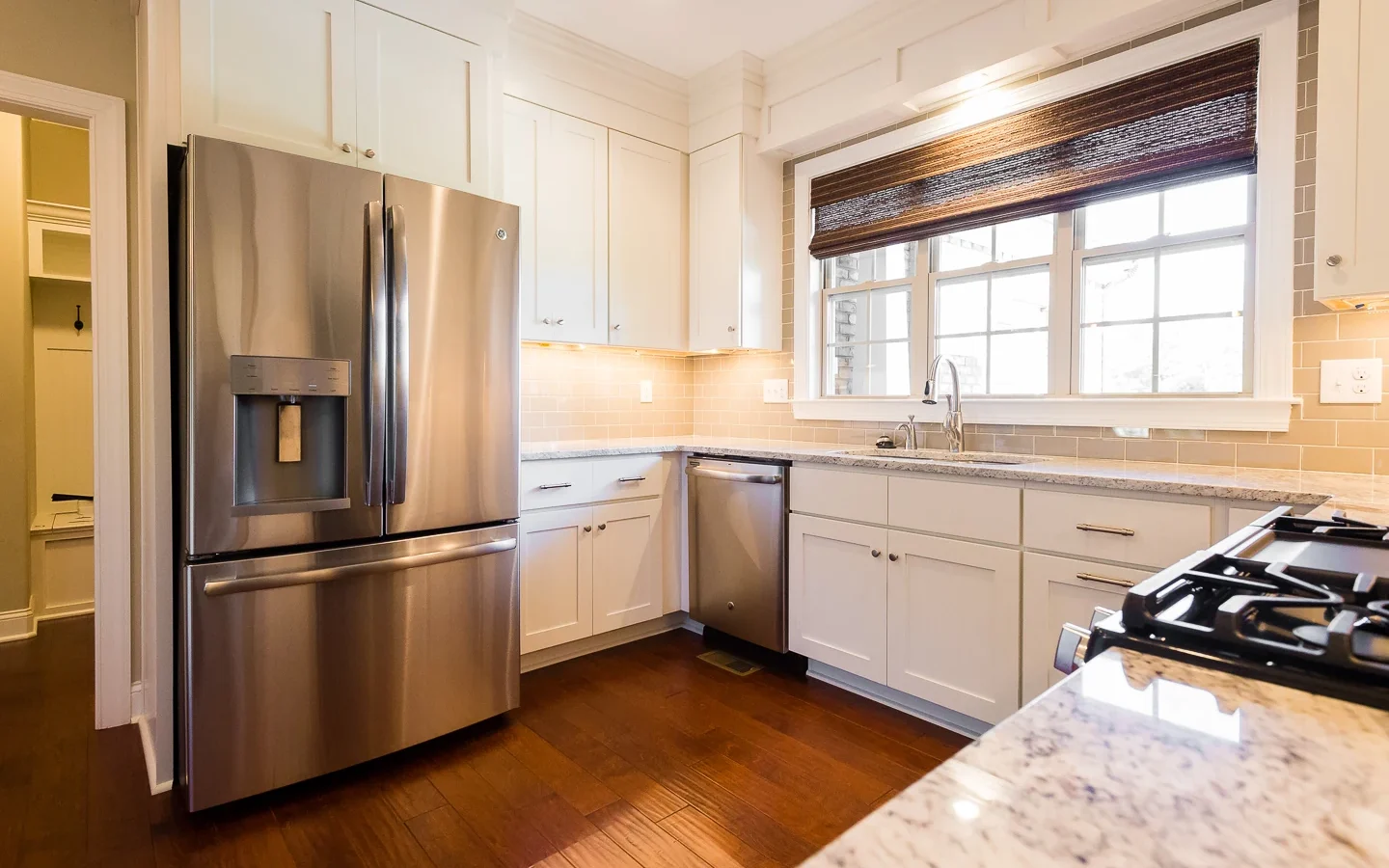
Shaker and Slim Shaker cabinets share the same basic idea: a flat center panel framed by clean rails and stiles. The main difference is visual weight. Traditional Shaker doors use a wider frame, while Slim Shaker doors use a noticeably narrower frame for a lighter, more contemporary look.
Traditional Shaker cabinets
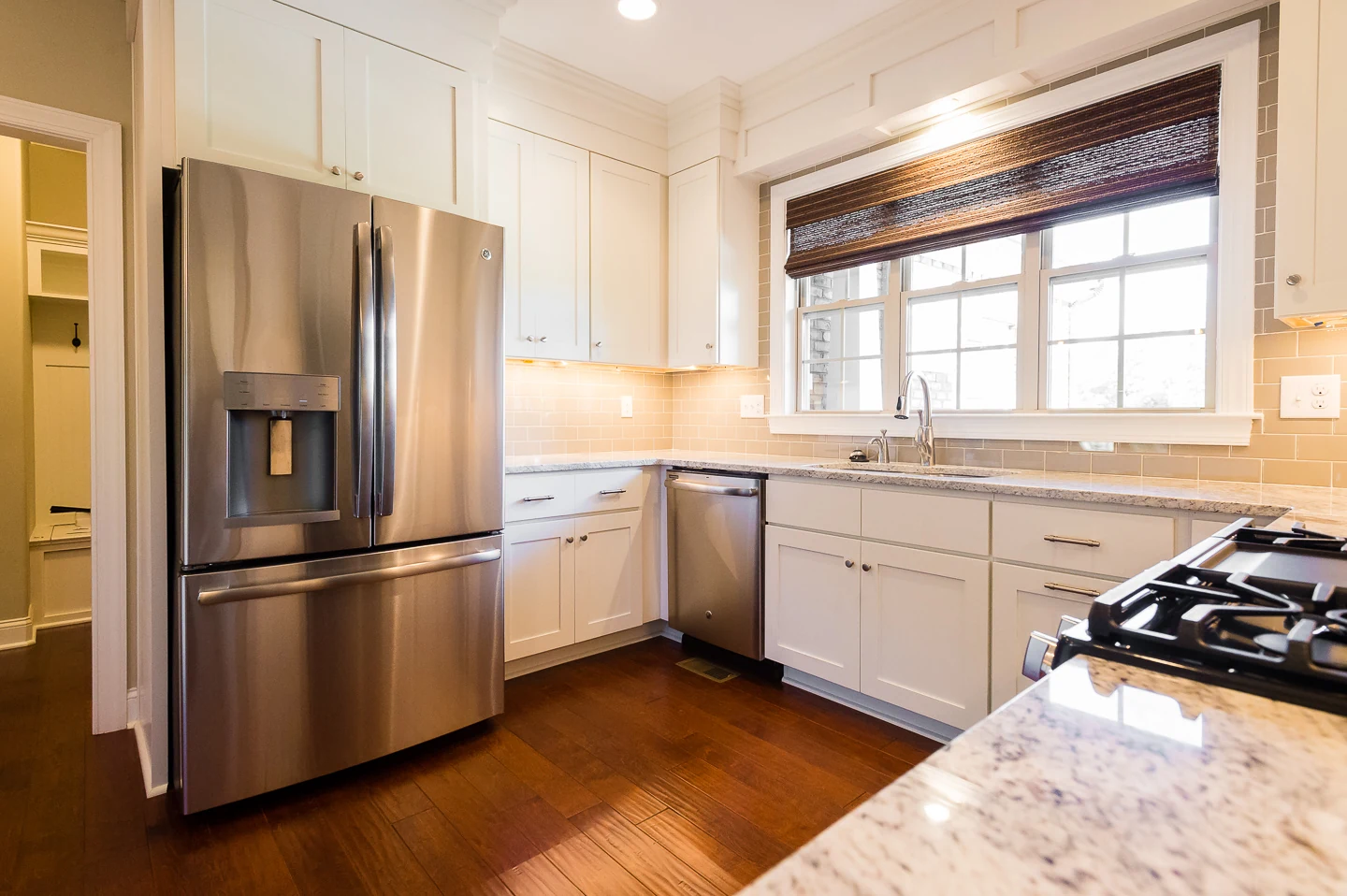
Traditional Shaker doors have a wider perimeter frame and a recessed center panel. That stronger outline makes the door read as more classic and architectural. It works especially well in transitional kitchens, traditional spaces, and projects where you want the cabinetry to have more visual presence. See ZEUS Shaker cabinet styles.
Slim Shaker cabinets
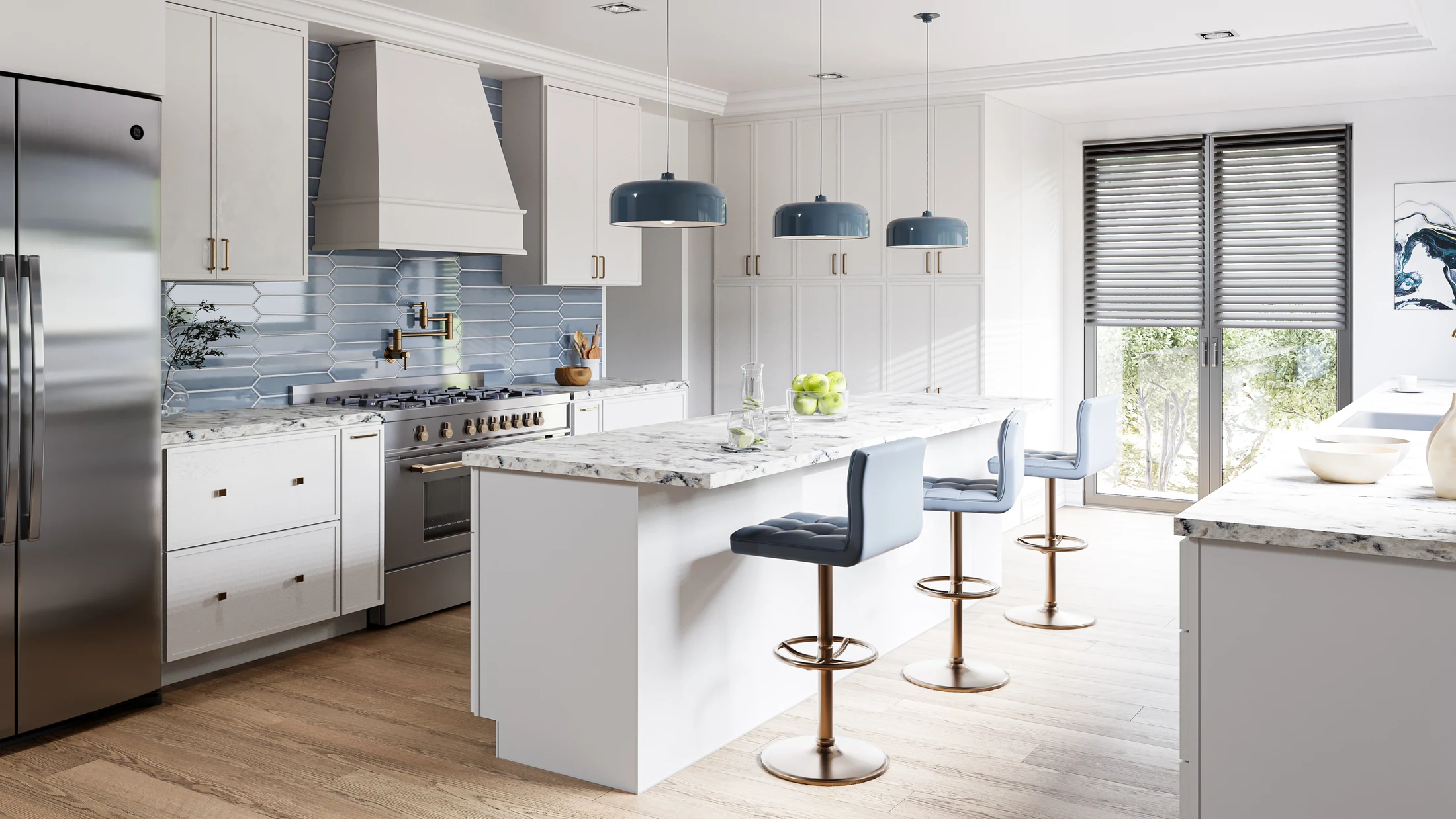
Slim Shaker doors reduce the width of the frame while keeping the familiar framed-door look. The result feels cleaner and more modern without becoming a completely flat slab door. This makes Slim Shaker a strong option for contemporary kitchens, smaller rooms, and spaces where a lighter visual rhythm is preferred. ZEUS also offers Slim Shaker options in the Oslo collection.
Which style makes a kitchen look more modern?
Slim Shaker generally reads as more modern because the narrower frame creates less visual interruption across a run of cabinets. Traditional Shaker still works in modern kitchens, but it tends to feel more transitional than minimalist.
Which one works better in a small kitchen?
In compact kitchens, Slim Shaker can make the cabinetry feel less heavy, especially when used in light finishes. Traditional Shaker can still work well, but the wider frame creates a stronger pattern across multiple doors and drawers.
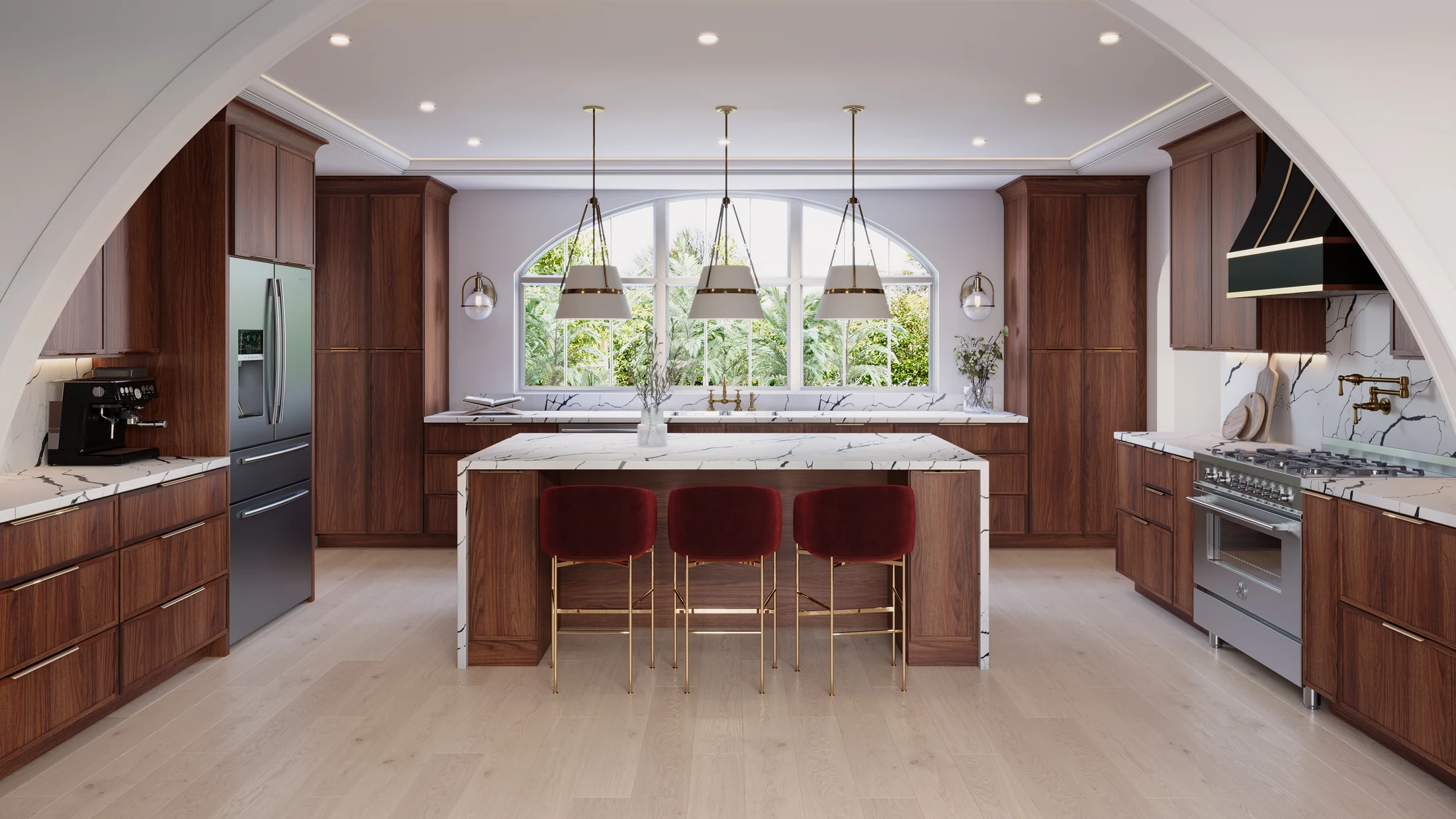
Color and countertop pairing
Both styles work with white, warm neutral, gray, dark, and wood-tone finishes. The cabinet door style does not determine the countertop material, but it changes the overall visual character. Slim Shaker pairs naturally with simple quartz and porcelain looks, while traditional Shaker also works well with more expressive granite, quartz, and marble patterns. Compare ZEUS countertop materials.
How ZEUS helps choose between them
ZEUS Cabinets & Countertops works with both standard Shaker and Slim Shaker styles for projects across Orlando and Central Florida. The right choice depends on the room, cabinet layout, color, countertop, appliances, and the level of detail you want the cabinetry to show.
To compare cabinet door samples for your project, request a free consultation with ZEUS.