
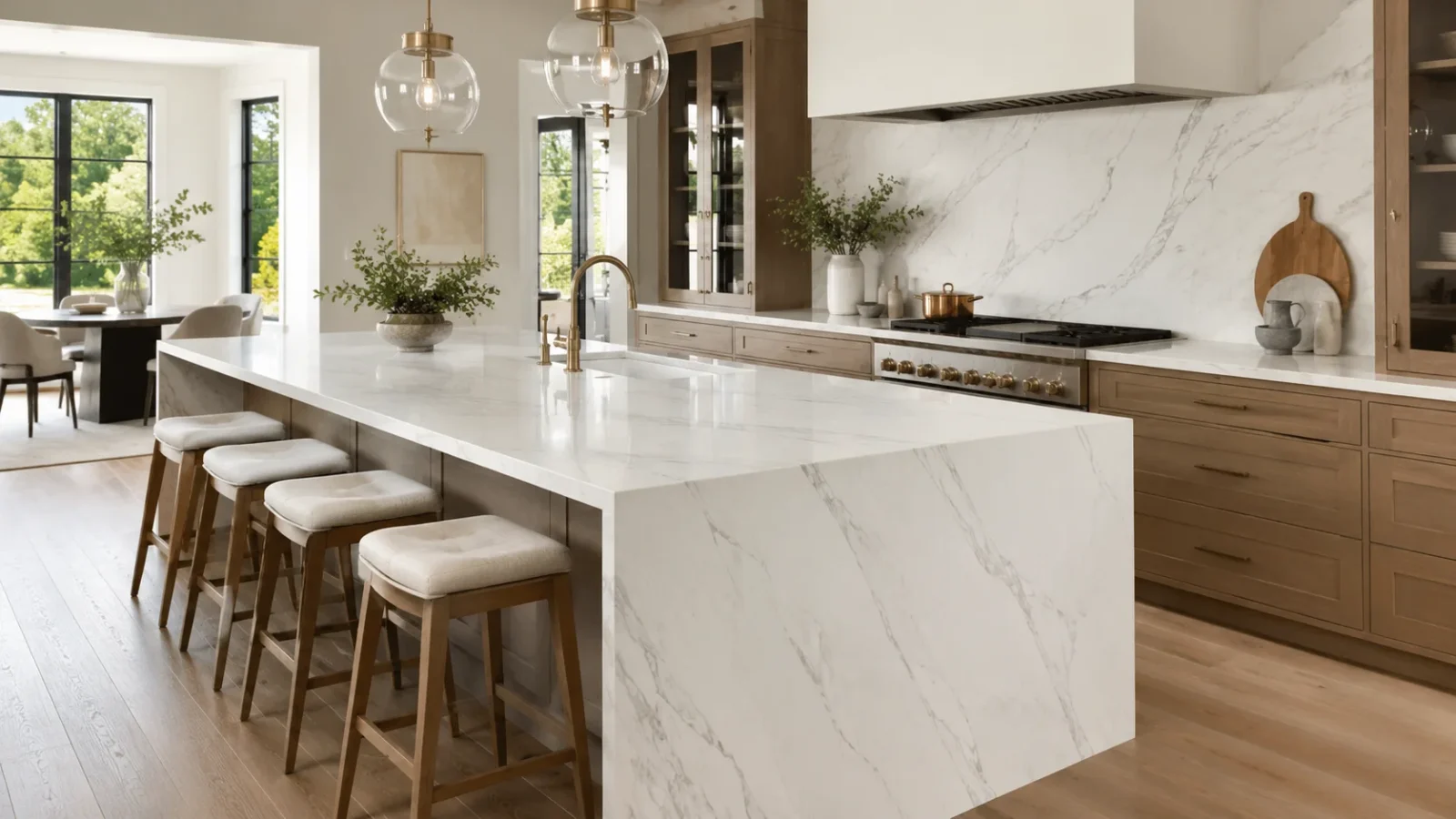
Quartz countertops are non-porous and easy to maintain, but they still need sensible care. Use mild cleaners, wipe spills promptly, protect the surface from very hot cookware, and avoid aggressive chemicals or abrasive pads that can dull or damage the resin-based finish.
Daily cleaning
For everyday use, wipe the surface with a soft cloth or non-abrasive sponge and warm water. A small amount of mild dish soap is usually enough for grease and food residue. Rinse or wipe away cleaner residue and dry the surface if streaks remain.
Quartz does not normally need sealing
Unlike many natural stones, engineered quartz is non-porous and does not normally require penetrating sealer. Applying an unnecessary stone sealer can leave residue or haze, so follow the quartz manufacturer’s care instructions rather than treating quartz exactly like granite or marble.
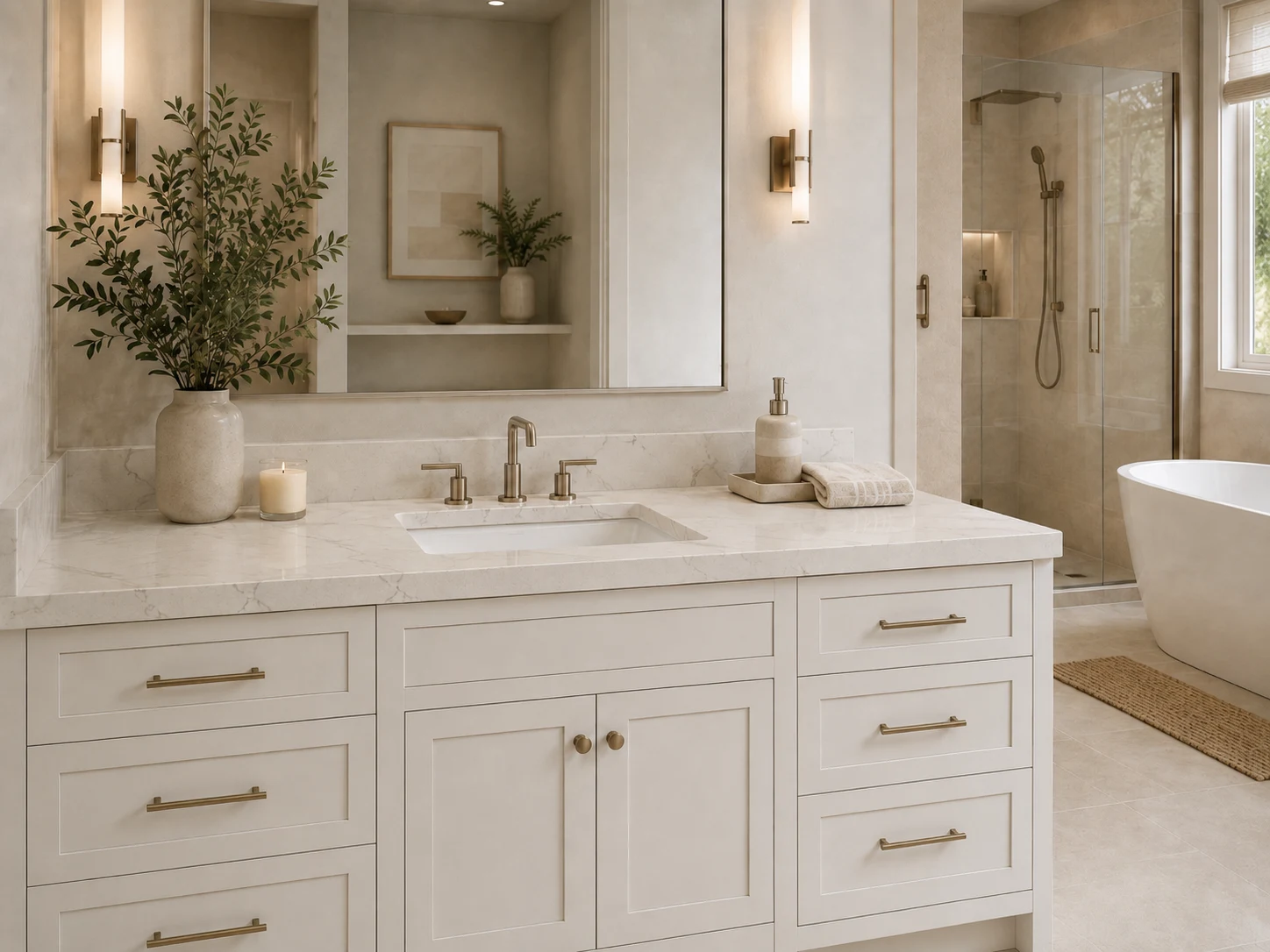
Protect quartz from high heat
Quartz contains resin binders, so very hot cookware can discolor or damage the surface even though the mineral component itself is heat resistant. Use trivets or heat pads under hot pans, countertop appliances, and cookware coming directly from the oven or stovetop.
Use a cutting board
Quartz is hard, but direct cutting can mark the finish and will quickly dull knives. Cutting boards also reduce the chance of chipping around exposed edges and sink or cooktop cutouts.

Avoid harsh chemicals and abrasives
Do not use oven cleaner, paint stripper, strong solvents, or highly caustic products on quartz. Abrasive powders and rough pads can change the sheen. If a difficult stain remains, use a cleaner specifically approved by the quartz manufacturer.
Watch seams, edges, and sink areas
The slab surface is non-porous, but seams, caulk joints, sink attachments, and the cabinet below can still be affected by water. Repair loose caulk or plumbing leaks promptly and avoid placing excessive weight on unsupported overhangs.
Learn more about quartz countertops, compare countertop materials, or request a ZEUS consultation.